
Formal exemption provided for tobacco smoke control for cultural ceremonial practices in LEED
A clear path for projects to honor cultural ceremony practices
Green Building Team on March 9, 2026
- Rating System/Standard
- LEED
- LEED v4
- LEED v4.1
- LEED v5
- Theme
- Certification updates
The LEED EQ prerequisite Environmental Tobacco Smoke is intended to address health concerns resulting from second-hand tobacco smoke; it was never intended to prohibit or deter Indigenous cultural ceremonial practices which may include the combustion of tobacco and other ceremonial materials. One such significant cultural activity is smudging, which involves the burning of sacred medicines: tobacco, sage, cedar, or sweetgrass.
The CAGBC is pleased to have worked with the USGBC to release LEED Interpretation 10517 to allow for the seamless integration of Indigenous cultural ceremonies within the LEED certification process. This LEED interpretation affirms that the prerequisite does not restrict this ceremonial practice, providing a clear path for projects to honor cultural ceremonies while maintaining LEED compliance. This interpretation applies to LEED v4 and LEED v4.1 projects, noting:
“An exception can be made for cultural ceremonial practices (e.g., smudging) which may include the combustion of tobacco and other ceremonial materials. Project teams may elect to incorporate design strategies or operational practices to manage the exposure of building occupants (who are not participating in the ceremonial practices) to ceremonial smoke, however, this is not a requirement of this prerequisite.”
A similar exemption is available for LEED v5 as noted within the reference guides under the EQ prerequisite No Smoking.
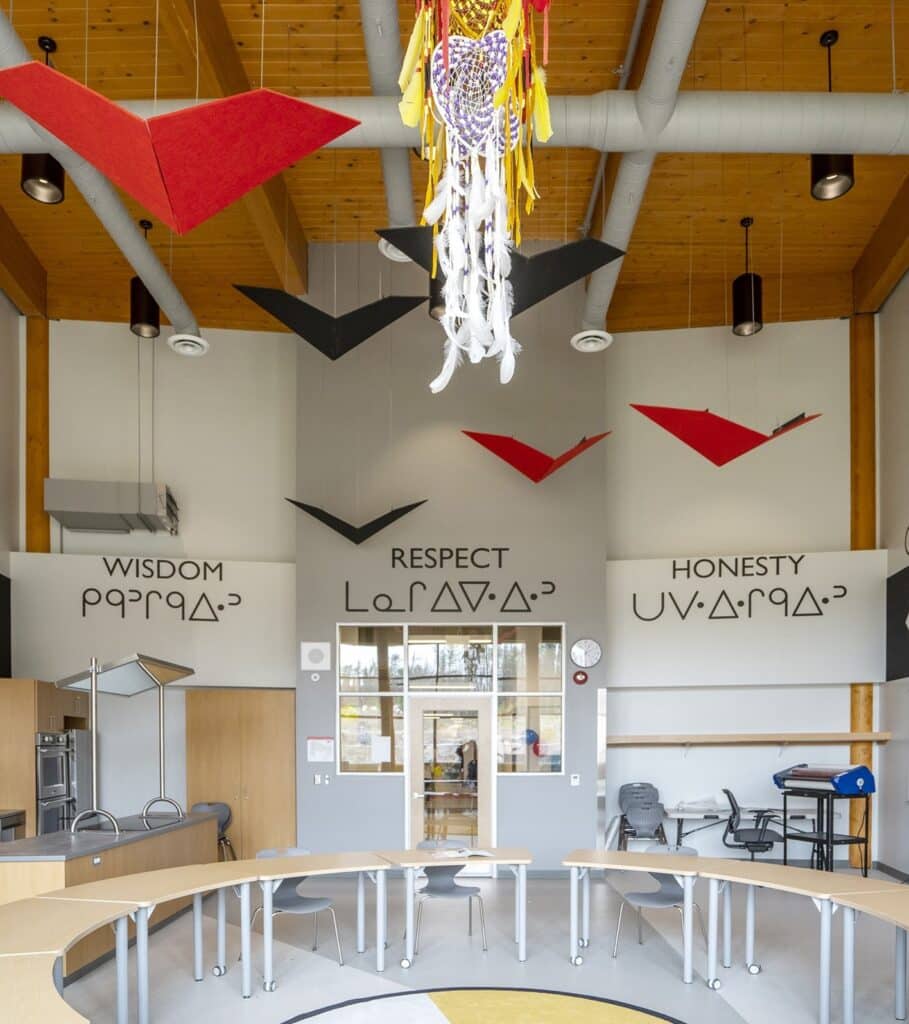
LEED BD+C: Schools v4, Silver
Photo Credit: Number TEN Architectural Group