
The value of green building certification
Brent Gilmour & Diana Mokhallati on September 22, 2026
- Theme
- Green Building
Why leading building owners continue to invest in green building certification
Building owners are navigating volatile energy costs, increasing climate-related risks and a growing number of performance expectations from governments, investors, lenders and tenants. At the same time, building performance standards, disclosure requirements and sustainable finance frameworks are reshaping how assets are evaluated. For Canada’s real estate sector, assessing the value of green building certification means focusing on investments that deliver measurable returns over the long term.
Unfortunately, that conversation too often focuses on a single question: What does it cost upfront?
It’s a familiar argument, but one that overlooks a more important question facing building owners today: What is the cost of owning an asset that is unprepared for where the market is heading? When viewed through that lens, the conversation moves beyond upfront costs and toward the long-term value, resilience and competitiveness of an asset.
What real estate leaders value
Recent research from the Canada Green Building Council (CAGBC), prepared with PricewaterhouseCoopers LLP (PwC), explored how building owners, developers and operators across Canada assess the value of green building certification for their business. Findings revealed benefits extending well beyond energy savings, including improved access to capital, financing advantages, stronger asset resilience, operating cost stability, regulatory preparedness and enhanced market competitiveness. Across every asset class examined, certification was increasingly viewed as part of mainstream asset strategy rather than a sustainability add-on.
Importantly, participants described certification as a framework that helps establish performance targets, manage risk and provide credible third-party verification of results.

Performance still matters
For many owners, performance outcomes are precisely why certification remains relevant.
Research participants reported significant reductions in energy consumption, operating costs and carbon emissions over the life of their assets. Institutional organizations, including universities, colleges and municipalities, cited operating savings ranging from 16 to 75 percent compared with conventional building approaches, with benefits accumulating over decades of ownership.
These organizations often retain assets for generations rather than investment cycles. Their focus extends beyond construction costs to total lifecycle value, including operating expenses, deferred maintenance, resilience and the ability to maintain building performance as expectations evolve.
The market is sending clear signals
The growing focus on high-performance buildings is not being driven by certification programs alone.
Governments are introducing benchmarking and building-performance policies. Financial institutions are expanding climate-risk assessment practices. Investors are seeking greater transparency around asset performance, resilience and emissions. Across the industry, expectations for measurable building outcomes continue to grow.
Canada’s sustainable finance landscape is also evolving. Initiatives such as CMHC’s MLI Select program already provide substantial financial incentives for better-performing multi-

family housing projects. For many residential developers, these incentives can generate interest savings ranging from hundreds of thousands to millions of dollars over the life of a project, significantly improving project economics.
At the same time, work underway on sustainable finance and Canada’s emerging green taxonomy framework is creating greater focus on what constitutes a high-performing, future-ready asset. As capital markets increasingly assess transition risk and long-term resilience, the ability to demonstrate performance is becoming more valuable. In this environment, certification helps provide an established and independently verified method of demonstrating building outcomes.
Risk management as a business priority
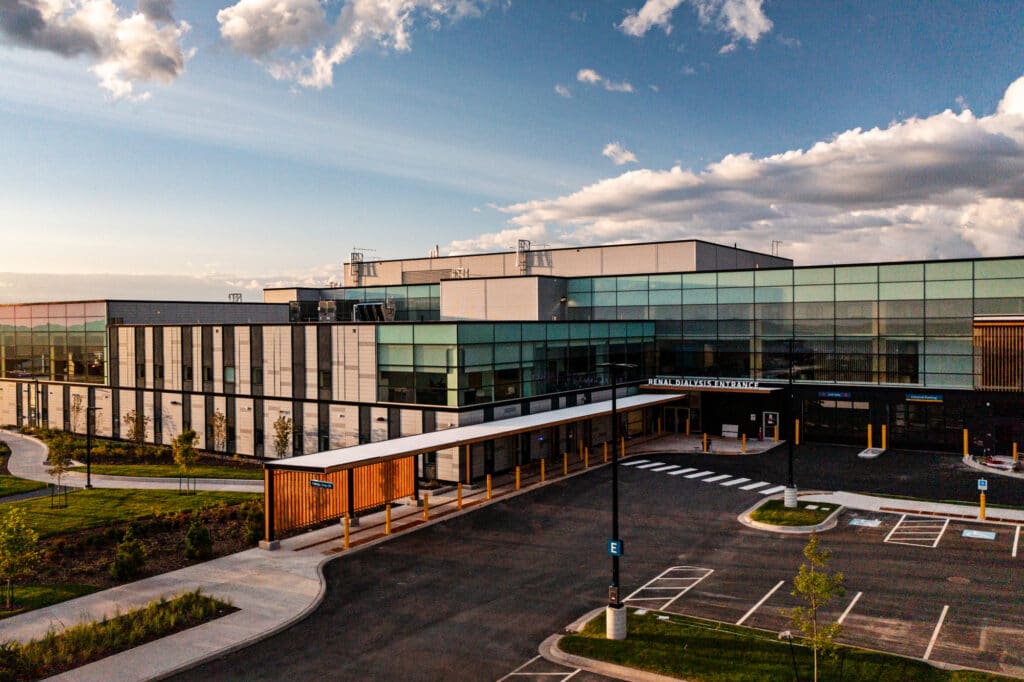
Credit: Cooked Photography/EllisDon
The discussion around green buildings has also evolved beyond environmental considerations. Today, many owners view certification through the lens of risk management.
The risks facing real estate portfolios are becoming more visible: rising operating costs, extreme weather events, changing regulations, disclosure requirements, tenant expectations and the growing possibility of asset obsolescence. Buildings that fail to adapt may require more significant and costly interventions in the future.
Research participants in CAGBC’s report repeatedly identified regulatory readiness, futureproofing and resilience among the primary reasons they pursue certification. For these organizations, the question is increasingly shifting from “What premium will certification deliver?” to “What risks can stronger performance help us avoid?”
Certification can help organizations establish a roadmap toward improved performance, while providing a degree of confidence that investments are aligned with evolving market expectations.
Tenants are paying attention
The office market offers another important perspective. Research from CBRE maintained measurable rental advantages over comparable non-certified buildings, even after accounting for factors such as age, location and renovation history. The research also pointed to growing tenant demand for high-performing workplaces as organizations increasingly prioritize sustainability, employee wellbeing and quality work. environments.
This aligns with broader trends across North America — including in Toronto, where employers are concentrating employees in higher-quality spaces that support comfort, productivity and organizational goals.
For owners competing to attract tenants, performance increasingly influences market appeal.
Credibility matters
As expectations around building performance continue to grow, credible data is becoming increasingly important. Owners, investors, lenders and tenants all need reliable information about energy consumption, carbon emissions, resource efficiency and indoor environmental quality. Independent third-party verification helps provide confidence that performance claims are supported by measurable outcomes rather than marketing language.
After nearly three decades of use and more than 195,000 projects worldwide – and over 7,000 in Canada — LEED or Leadership in Energy and Environmental Design® has helped establish a common framework for measuring, verifying and improving building performance. Administered in Canada by CAGBC, LEED’s introduction has helped support the evolution and growth of Canada’s green building sector.
A changing definition of value
Certification systems like LEED and the Zero Carbon Building Standards work because ongoing improvement is built into their DNA. As market needs have shifted, how they are evaluated also needs to change, moving past an upfront-cost only valuation to capture how today’s most sophisticated owners, investors and lenders make business decisions. What they’ve discovered is that the value of green building certification is increasingly defined by its ability to support stronger performance, reduce risk and deliver credible, independently verified outcomes.
Understanding how certifications work
Not all buildings are the same, and not all voluntary certifications are either — criticisms about one building or another often come back to not understanding how certifications work.
Voluntary certification programs become more rigorous over time. A certified building from 2005 reflects different requirements than one certified in 2025, evolving ahead of technologies, codes and market expectations.
Not every certification measures operational performance. Some certifications assess design strategies and predicted outcomes — often before a building is constructed, while others verify actual performance using measured energy and carbon data.
Performance depends on operation. Even the most efficiently designed building requires effective commissioning, maintenance and occupant practices to achieve its full potential. That’s why the industry increasingly emphasizes ongoing performance measurement and recertification.
These distinctions highlight why third-party certification systems continue to evolve, adding stronger performance requirements, operational verification and recertification pathways that drive continuous improvement.