
Lower fees, faster builds, greener homes
CAGBC Staff on December 8, 2025
- Theme
- Advocacy
New initiative between the federal government and City of Ottawa offers a practical path for Canada’s housing push
Today’s announcement from the Government of Canada and the City of Ottawa offers a compelling path forward for increasing affordability, but does not yet include measures to promote energy efficiency or sustainability—highlighting an important opportunity for future collaboration with Build Canada Homes (BCH).
The announcement today includes ambitious local measures including reducing or waiving development charges, permit fees, and property taxes on priority residential projects. Paired with streamlined approvals and modern construction methods that will prioritize local and low-carbon materials, the partnership aims to build up to 3,000 mixed income and affordable units starting in 2026. It’s an approach designed to lower carrying costs and bring supply online faster.
Why focus on fees?
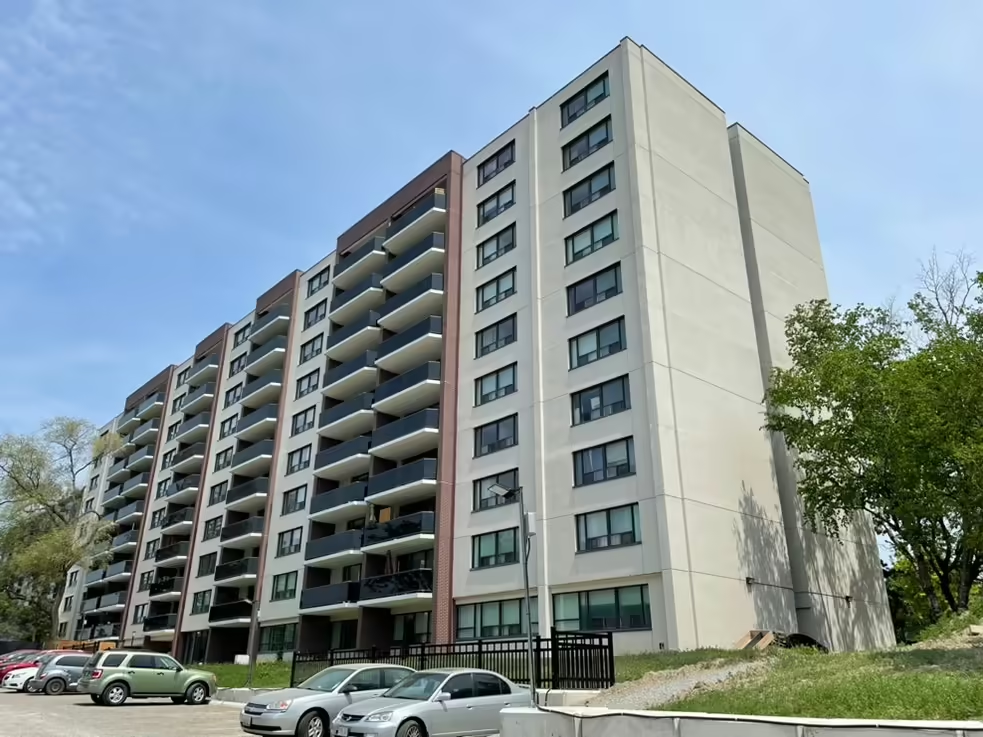
New CMHC data quantifies what many builders have argued for years: municipal development charges can add 8–16% to the price of a new condo, with per unit fees ranging from ~$39,600 in Ottawa to ~$121,500 in Markham. For single detached homes, charges can reach $180,600 in Toronto—costs typically passed on to buyers and renters. Cutting these fees (especially on affordable projects) can directly improve pro formas and unlock stalled sites.
At the same time, CAGBC warns that chasing “fast and cheap” alone risks higher life cycle costs—through bigger utility bills, earlier retrofits, and reduced resilience. The Canada Green Building Council’s “Two Million Green Homes” report argues affordability and sustainability are complementary goals when we embed energy efficiency, low carbon materials, and resilience from the start, particularly in multi-unit rental housing, where operating costs drive long-term affordability.
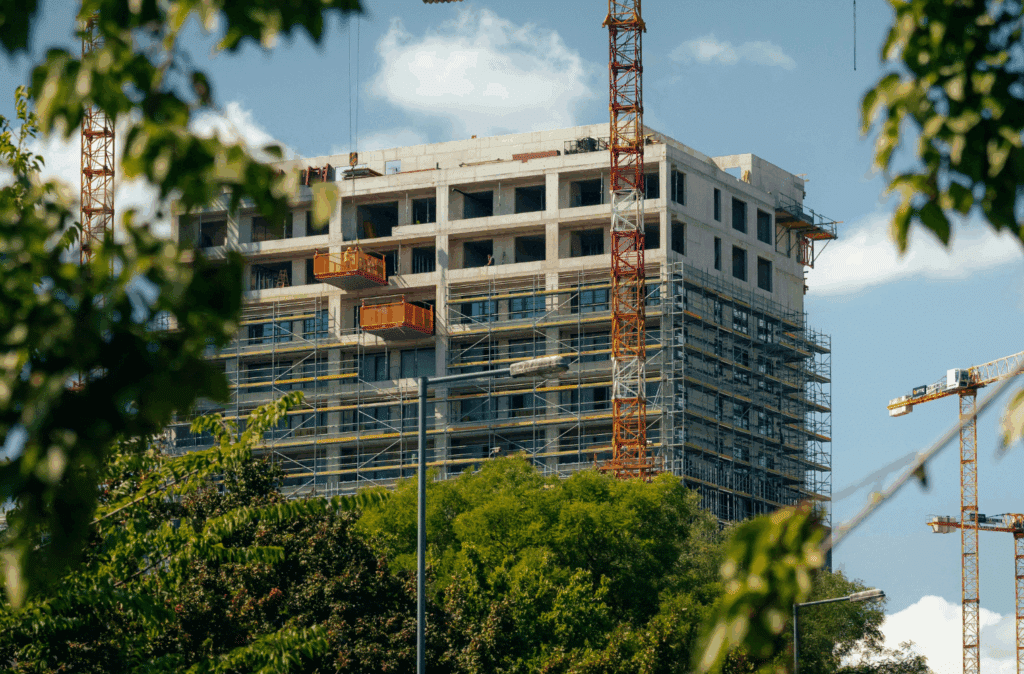
Innovations in materials and processes are also a focus, with the government looking to encourage the use of prefabrication, as well as Canadian-made materials such as mass timber and low-carbon steel. A report from Clean Energy Canada found significant material‑level emissions cuts are possible at no or negligible price premiums in Canadian case studies. Where premiums do occur, they are typically small relative to project budgets and can be offset by smarter design choices.
Policy alignment matters
The new Ottawa housing measures reference “Buy Canadian” procurement, and Canada’s broader Buy Clean push is already influencing federal projects. Put together, a workable blueprint emerges:
- Lower the fee stack that directly inflates home prices—especially for affordable and near‑transit projects—and pair this with faster approvals.
- Lock in sustainability from day one, guided by CAGBC’s Two Million Green Homes report, giving Canadians lower utility costs, healthier and more comfortable homes, while protecting them from extreme-weather events.
- Use low carbon & Canadian materials to cut embodied carbon without material cost shocks, backed by procurement standards that scale market supply.
- Leverage trusted third-party certifications like LEED and the Zero Carbon Building Standards to ensure sustainability outcomes are achieved.
In short, fee relief tackles the immediate affordability barrier, while green building practices protect affordability over the long term. For municipalities, developers, and community housing providers, the path forward isn’t either/or—it’s build more homes, build them faster, and build them better.