
From concepts to standards to practice, with Adam Stoker
CAGBC staff on September 29, 2026
- Theme
- Member Profiles
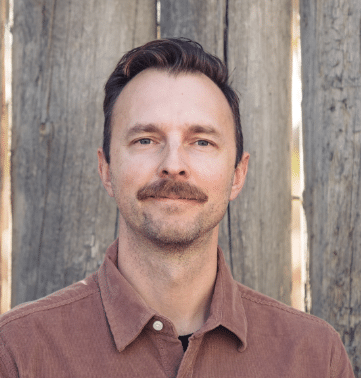
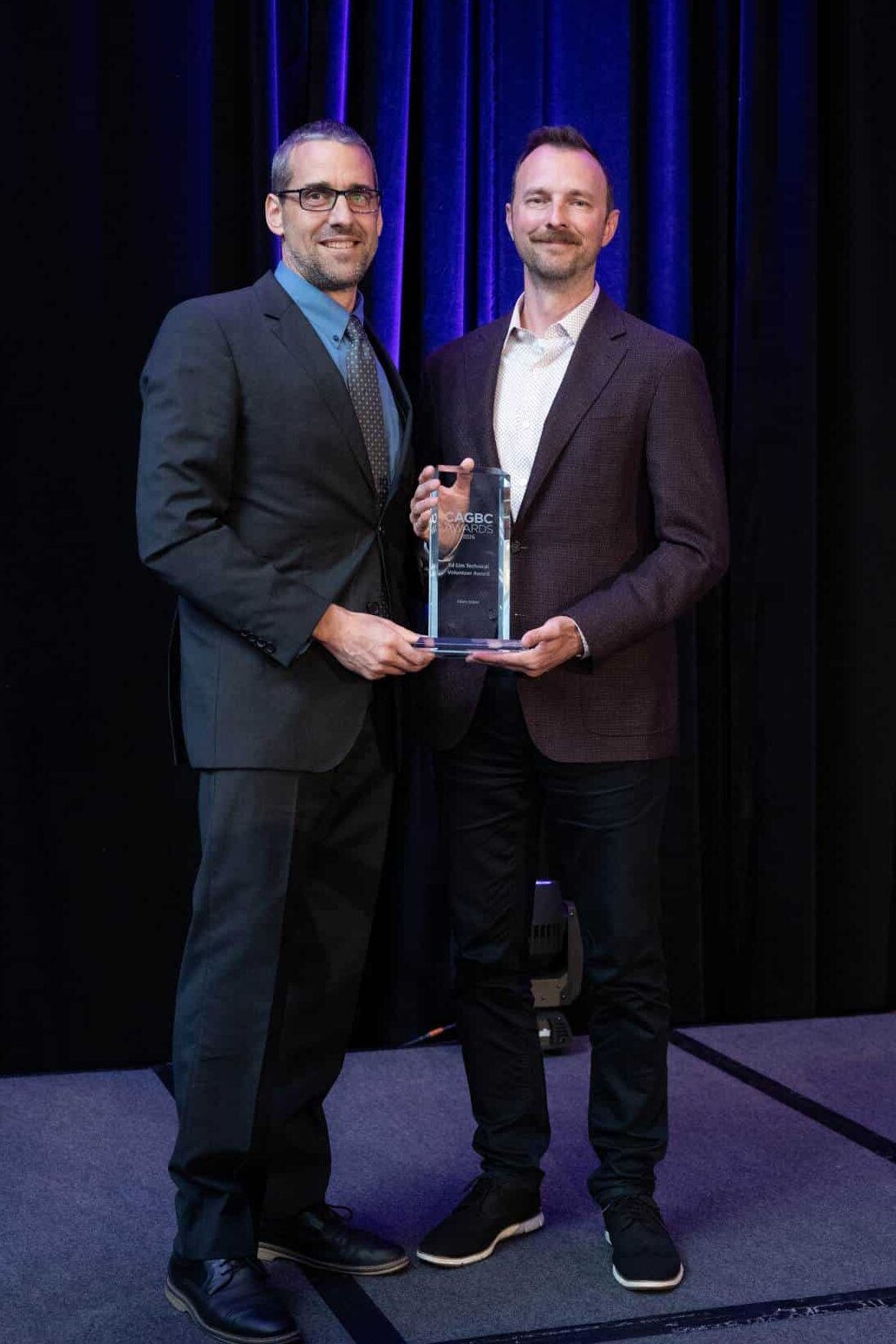
As a technical leader in sustainable building and infrastructure, Adam Stoker has contributed to the development of standards and practices that are helping shape the future of low-carbon, resilient buildings. In recognition of his contributions to advancing green building standards, Adam was recently named the recipient of CAGBC’s Ed Lim Technical Volunteer Award. In a recent discussion, he shared his experience on bringing a Canadian lens to a global standard, translating sustainability objectives into practical decisions, and the role practitioners can play in advancing the next generation of low-carbon building practices.
You played a key leadership role in developing LEED v5 as vice-chair and now chair of USGBC’s LEED Design and Construction Consensus Committee. How did your experience with CAGBC’s technical committees shape your perspective, and how did you help ensure LEED v5 addresses the unique realities of Canadian practitioners alongside broader international priorities?
My work with CAGBC’s technical committees gave me a strong appreciation for how rating systems succeed when they are both ambitious and practical. Canadian practitioners operate across a wide range of climates, regulatory contexts, market conditions, and project types, so the details matter. A requirement that seems straightforward in one jurisdiction can create unintended barriers in another if it does not account for regional energy grids, climate resilience needs, procurement rules, or the realities of public-sector delivery.
That experience shaped how I approached LEED v5. In the consensus process, I tried to bring forward a Canadian lens while also recognizing that LEED is a global framework. My focus was on helping ensure the system could drive deeper decarbonization, better lifecycle outcomes, and stronger climate resilience without losing sight of usability for the people applying it on real projects. The most valuable contribution I could make was often to translate between policy ambition, technical rigour, and the practical constraints faced by project teams – hopefully we’ve hit the mark!
How do your day-to-day responsibilities as a Sustainable Infrastructure Engineer at The City of Calgary intersect with the cutting-edge standards and frameworks you help develop? Has your expertise directly shifted how Calgary approaches the decarbonization and lifecycle performance of its civic assets?
The connection is very direct. In my role at The City of Calgary, I work at the intersection of policy, capital planning, design guidance, and project delivery. That means translating long-term climate and sustainability objectives into decisions that can be applied to civic assets at different stages of their lifecycle, from early business case development through design, construction, renewal, and operations.
Working on national and international frameworks helps me see where the market is moving, but municipal implementation keeps me grounded in what is feasible, measurable, and durable over time. I would not frame the impact as one person shifting an organization on their own. The progress comes from collaboration across teams. What I can bring is technical clarity, a strong understanding of emerging standards, and a lifecycle perspective that helps embed decarbonization, resilience, and performance expectations earlier in the decision-making process.
How does winning an award named after a respected technical volunteer like Ed Lim influence your commitment to pushing sustainable engineering standards forward?
It is a meaningful honour because technical volunteerism is one of the foundations of progress in this field. People like Ed Lim helped build trust in sustainable building standards by contributing time, expertise, and judgment to work that is often behind the scenes but has a lasting influence on the industry. From the stories I’ve heard about Ed Lim, he approached his work with enthusiasm and a consistent willingness to support others, and I aspire to bring that same spirit to my own volunteer work.
Receiving an award associated with that legacy reinforces the responsibility to keep contributing. Standards only remain relevant when practitioners continue to test them against real projects, share lessons learned, and push for continual improvement. For me, the award is not only recognition of past work; it is encouragement to keep helping bridge engineering practice, public-sector implementation, and the broader transformation needed to deliver low-carbon, resilient, and high-performing buildings.
What do you see as the most important shift for practitioners as LEED v5 and other low-carbon frameworks move from development into implementation?
The biggest shift is moving from treating sustainability as a set of discrete project features to treating it as an integrated performance strategy. Decarbonization, resilience, health, materials, water, and equity are increasingly connected. Practitioners will need to make decisions earlier, use better data, and collaborate across disciplines in a more intentional way. The projects that succeed will be those that understand sustainability not as an add-on, but as part of core risk management, asset value, and service delivery.
What advice would you offer to emerging professionals who want to contribute to the future of green building standards?
Get involved, stay curious, and do not underestimate the value of practical experience. Standards are stronger when they are shaped by people who understand how buildings are actually designed, constructed, operated, and renewed. Volunteer committees, peer networks, project teams, and public-sector working groups are all opportunities to learn and contribute. The most effective technical leaders are often those who can listen carefully, ask good questions, and help turn complex sustainability objectives into decisions that project teams can act on.