New report highlights growing momentum & shifting barriers to retrofit implementation
CAGBC Staff on November 18, 2026
- Theme
- Retrofits
Year two of the Purpose Retrofit Accelerator reveals strong industry commitment, slow implementation progress.
OTTAWA, ON – November 18, 2026 – Recent federal commitments, including renewed support for the Deep Retrofit Accelerator Initiative (DRAI), expanded retrofit financing programs and progress on Canada’s sustainable finance taxonomy, signal growing recognition of the role retrofit activity will play in improving building performance and supporting Canada’s economic and climate objectives.
As governments and financial institutions increase their focus on building performance and retrofit investment, a new report from the Canada Green Building Council (CAGBC) and Purpose Building finds that Canada’s building sector is increasingly prepared to pursue deep retrofits, but significant barriers remain in moving projects from planning to implementation.
The second annual report from the Purpose Retrofit Accelerator draws on project data, building performance analysis and industry feedback. Results show that building owners are increasingly integrating retrofit planning into broader asset management and capital planning strategies, yet many projects continue to face challenges related to financing, project readiness and execution.
“Building owners no longer need to be convinced that retrofits can create value. The question is when and how those retrofits become reality,” said Thomas Mueller, President and CEO of CAGBC. “Building owners need to react to evolving investor expectations of asset performance, rising energy costs and more physical climate impacts. Access to better financing options, practical pathways, and policy certainty are needed to advance retrofit implementation at scale.”

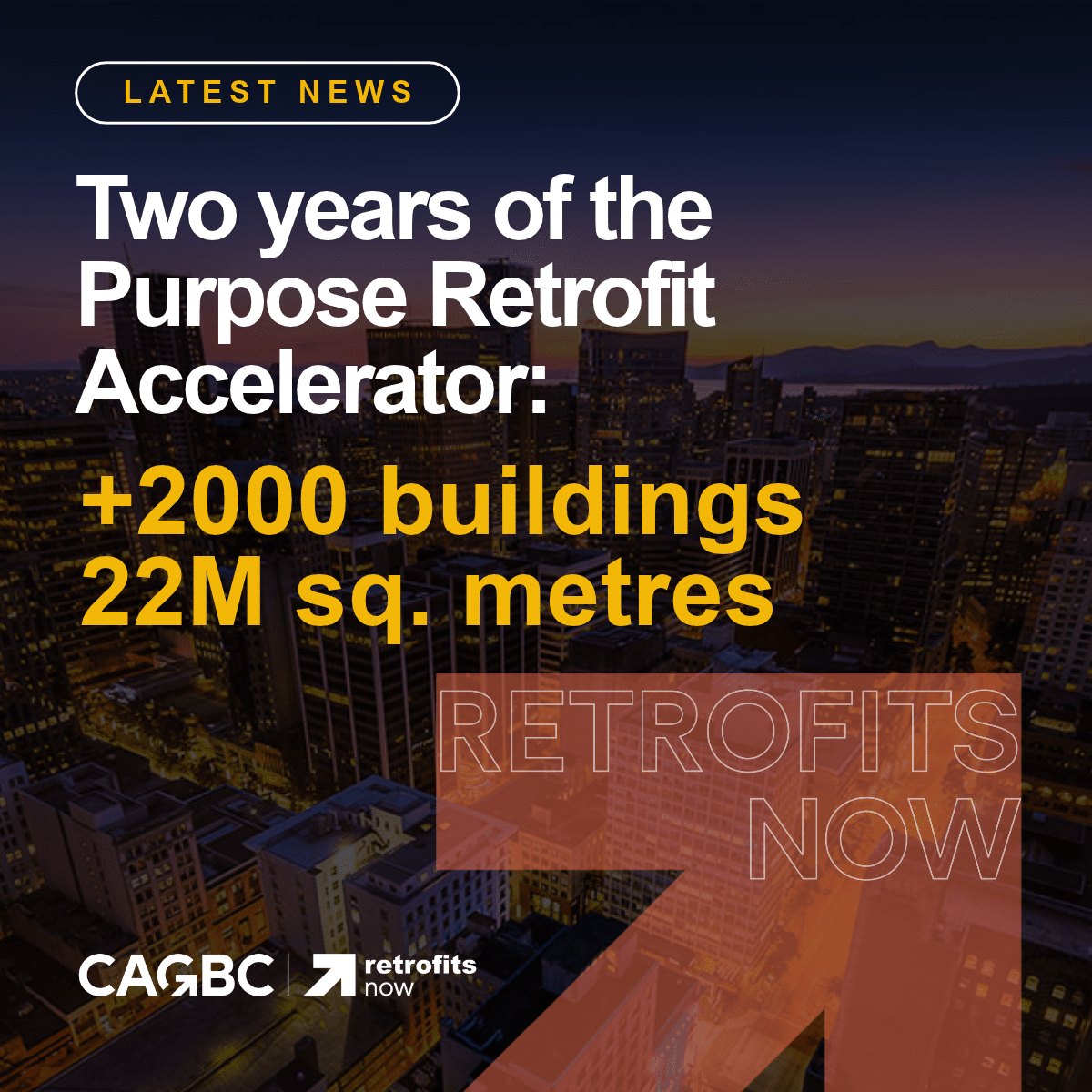
More than 2,000 buildings representing over 22 million square metres of floor area have participated in the Purpose Retrofit Accelerator since its launch, helping owners identify opportunities to improve building performance and reduce emissions while strengthening long-term competitiveness.
Retrofit planning is maturing
The report suggests the market is entering a new phase of retrofit adoption. While early discussions often focused on climate commitments, participants increasingly identified operational savings, asset competitiveness, resilience, capital planning and risk management as key drivers of retrofit investment decisions.
Among the findings:
- Upfront capital costs, financing challenges and implementation complexity remain among the most significant barriers to progress.
- More than 150 retrofit opportunities were identified across participating buildings for implementation before 2030.
- Many organizations have completed building assessments and developed retrofit roadmaps.
“The results from Year Two demonstrate that the market is building momentum,” said Eric Chisholm, Principal, Purpose Building. “Accelerator participants are seeing how significant performance improvements are achievable with deep retrofits, and how transition planning provides a practical path forward. However, to truly retrofit and deliver performance at scale, additional support is needed, particularly around funding, approvals, and project development. This is why the Accelerator exists: to help bridge the gap between ambition and action.”
As the market moves from awareness and planning toward implementation, targeted support for project development, technical capacity and financing readiness will be essential to translating retrofit opportunities into completed projects.
Better information leads to better decisions
The report also demonstrates that meaningful emissions reductions can often be achieved through practical, cost-effective interventions.
A previous analysis of participating buildings found that retrofit investments averaging approximately $10 per square foot could achieve emissions reductions approaching 40 percent by 2030, although results varied significantly by building (for example due to condition or project scope).
From commitment to action
The report concludes that while technology solutions continue to improve and awareness of retrofit opportunities has grown significantly, additional support is now needed to help building owners translate plans into completed projects.
The Purpose Retrofit Accelerator is funded through Environment and Climate Change Canada’s Deep Retrofit Accelerator Initiative (DRAI). Through the Retrofits Now website (retrofitsnow.ca) CAGBC and Purpose Building are sharing lessons learned from retrofit projects across Canada.
“Canada already has many of the tools needed to improve building performance at scale,” said Chisholm. “The next step is accelerating implementation. By sharing data, practical experience and proven strategies, we’re helping building owners move from intention to action so they can unlock the full potential of retrofit investments.”
The full year two Purpose Retrofit Accelerator Report is available at RetrofitsNow.ca.
Interested in learning more about the Accelerator’s work and findings? Join us December 10 for a free webinar led by Purpose Building, highlighting what it takes to move retrofits from planning to implementation.
RETROFITS NOW
December 10 webinar