
Building Prosperity: Insights on Canada’s Green Workforce
Canada’s green building sector is a powerful economic force and a critical pillar supporting the country’s transition to a low-carbon, resilient
economy. Over the past decade, the Canada Green Building Council (CAGBC) has tracked the sector’s economic contribution in terms of gross
domestic product (GDP) and employment.
Drawing on 2024 data, Building Prosperity examines the market evolution and economic contribution of Canada’s green building sector, its growth potential in the face of a rapidly changing economic and policy environment, and finally, addresses the workforce system changes needed to meet demand for green, low-carbon and resilient buildings.
Accordingly, this report offers an updated economic assessment, and a forward-looking view of how the green building sector can drive growth and resilience in a rapidly changing landscape.
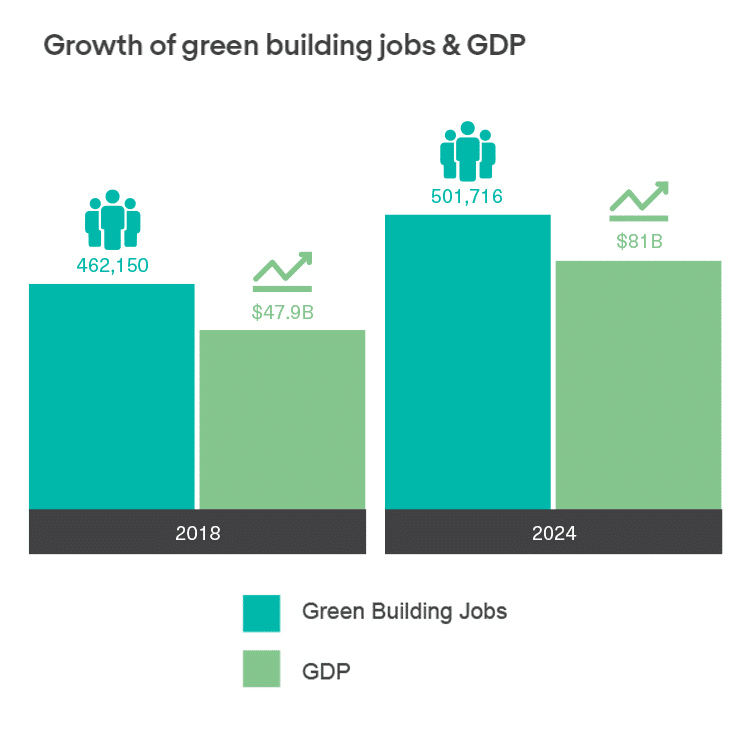
In 2024, Canada’s green building sector generated:
- $81 billion in direct GDP
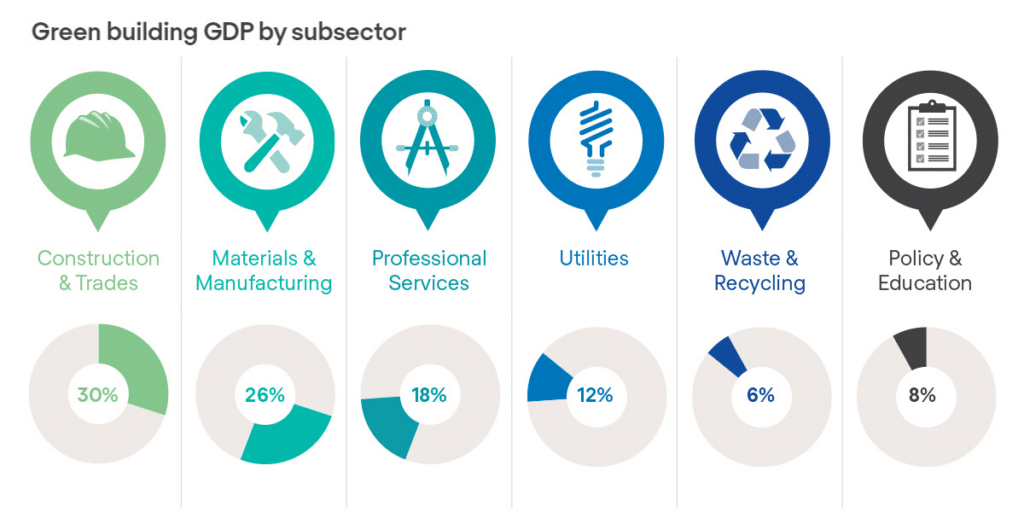
- 501,716 direct jobs across construction and trades, materials and manufacturing, professional services, utilities, waste and recycling, and policy and education
Since 2018:
- Employment in green building has grown by 8% despite macroeconomic pressures.
- Sector GDP has increased by 40%, significantly outpacing job growth
- GDP per job has risen by 36%, underscoring rising productivity and value creation.
Green building activity benefits every province and territory, with the largest impact in Ontario (43%), Quebec (20%), and British Columbia (16%), demonstrating that green building results in economic benefits that are national in scope.
Decarbonization in the buildings sector is not a cost burden – it is an engine of productivity, innovation, and economic growth.
Importantly, approximately a quarter (25%) of sector GDP in 2024 – nearly $20 billion – is directly tied to decarbonization activity, including:
- Heat pump and high-efficiency HVAC manufacturing and installation
- Electrification and fuel-switching infrastructure
- On-site renewable energy systems
- Building envelope upgrades and deep retrofits
A Pivotal Moment
Canada’s green building sector already delivers substantial economic value and measurable emissions reductions. With coordinated policies, sustained investment, workforce expansion, and regulatory alignment, the sector could deliver nearly $150 billion in GDP and more than
one million green jobs by 2030, while positioning Canada to achieve net-zero buildings by 2050.
The opportunities are significant – but so are the risks of fragmented action. Stabilized retrofit funding, harmonized performance standards, expanded training pathways, and embedded inclusion strategies are essential to unlock the sector’s full potential. Canada has the tools, market drivers, and technical pathways required to advance green buildings. With focus on scale, coordination, and commitment, the green building sector can simultaneously address housing needs, drive inclusive economic growth, and anchor Canada’s transition to a resilient, net-zero future.
Building Prosperity: Insights on Canada’s Green Workforce is a collaboration between CAGBC and Delphi. The study was funded by the Government of Canada’s Future Skills Program.
